---
1. The Structural Limits of Rule Based Automation — Why "If/Then" Was Always a Ceiling, Not a Foundation
To understand what is being destroyed, you must first understand how brittle the predecessor architecture truly was.
Stuart Russell and Peter Norvig's canonical text ‘Artificial Intelligence: A Modern Approach’ technically classifies a simple if/else statement as the most rudimentary form of an intelligent agent. That framing, while academically precise, is operationally devastating to the entire rule-based automation industry: it means that the "intelligent" marketing automation platforms and helpdesk routing logic enterprises spent billions on over the last two decades were, in the most literal academic sense, the lowest possible tier of AI capability.
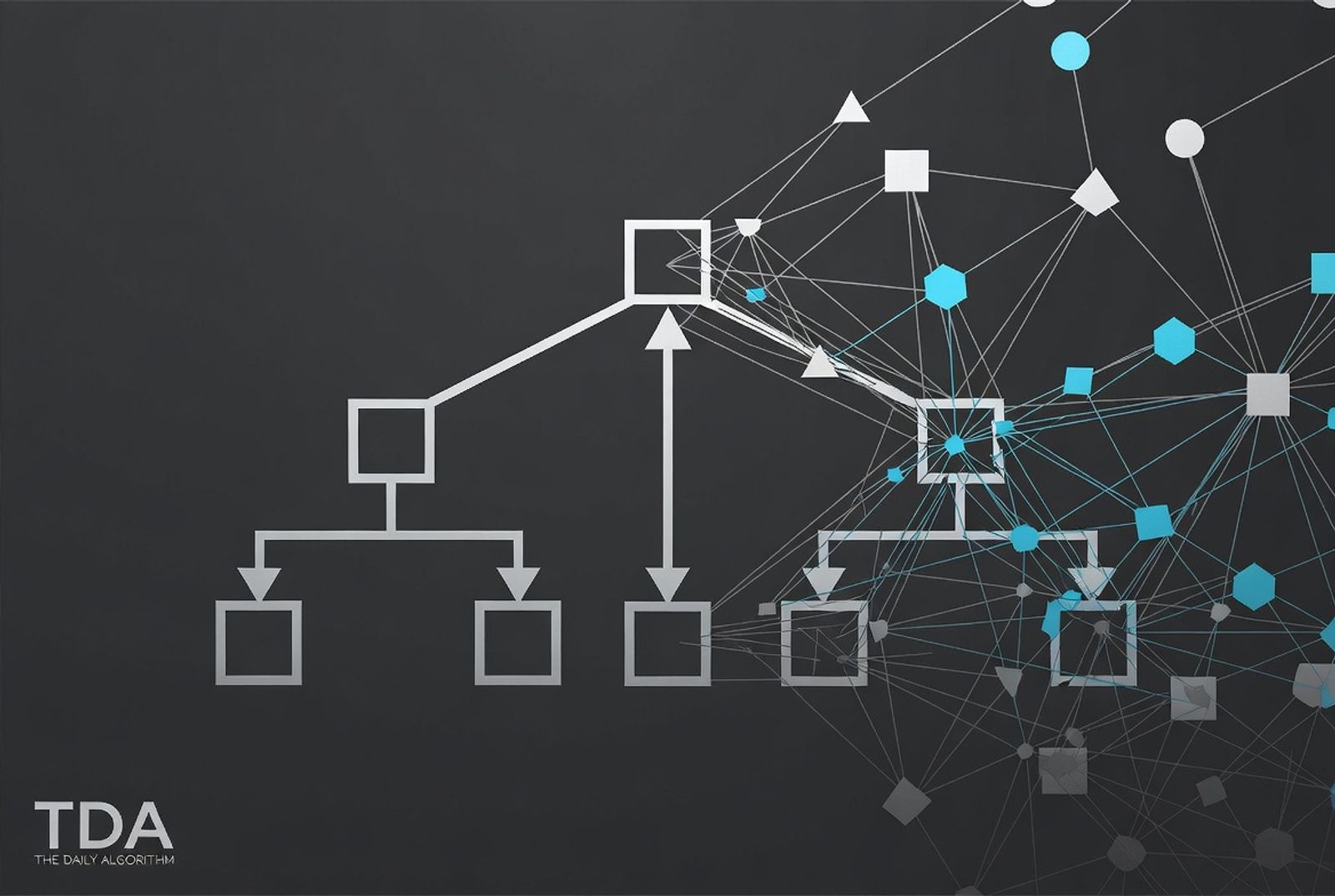
Rule-based systems operate on fixed conditional logic: a predefined trigger fires a predefined action. They cannot adapt to context outside their rule set, cannot decompose novel problems, and cannot recover from edge cases without manual intervention. In customer support, this manifests as chatbots that collapse the moment a user's query doesn't pattern-match to a scripted flow. In marketing automation, it produces static drip sequences that ignore real-time behavioral signals. The system's intelligence is entirely front-loaded into whoever wrote the rules, meaning the system degrades the moment the business environment shifts.
This is the ceiling that agentic AI doesn't merely raise, it removes entirely.
---
2. Defining the Replacement Architecture: What an AI Agent Actually Is
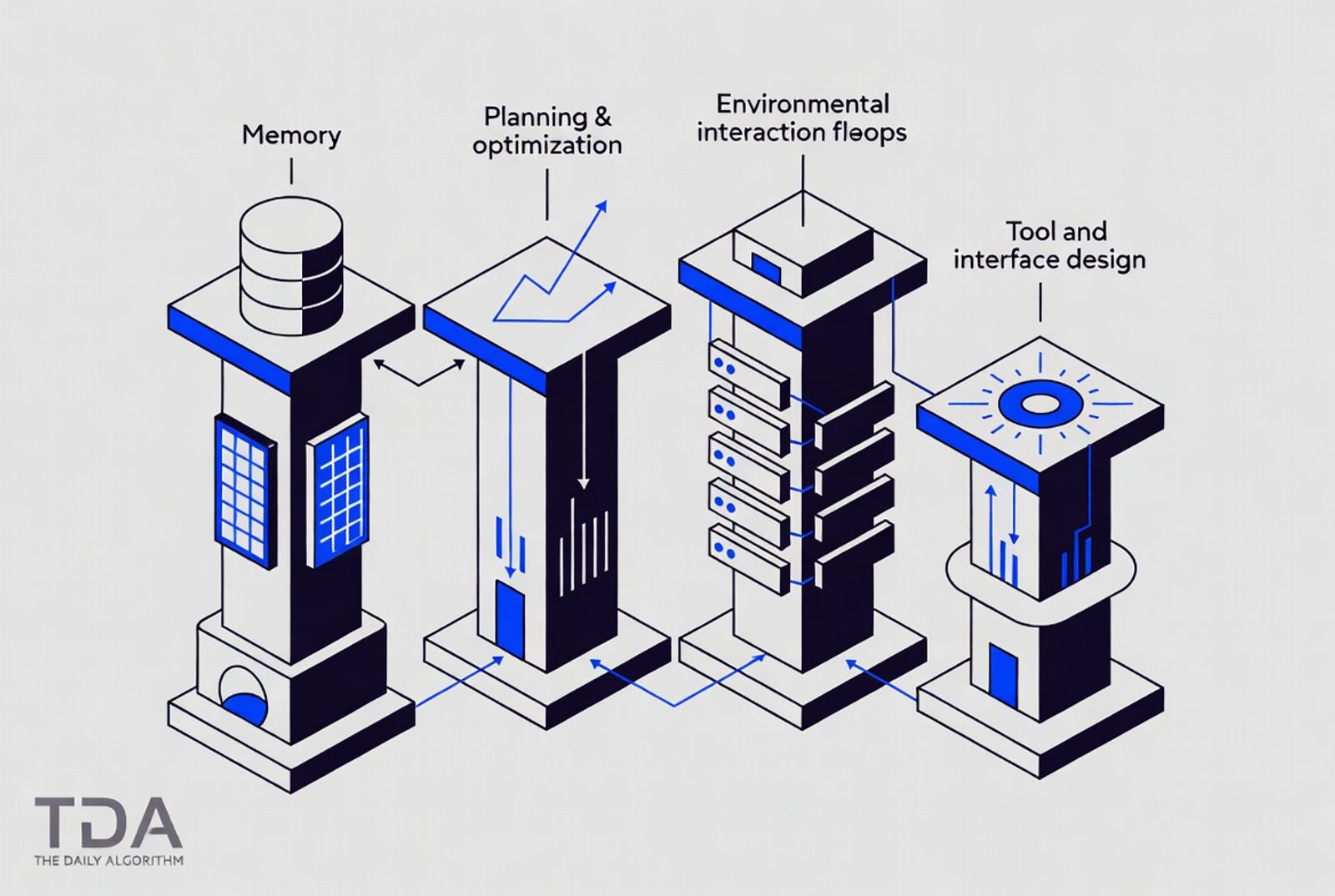
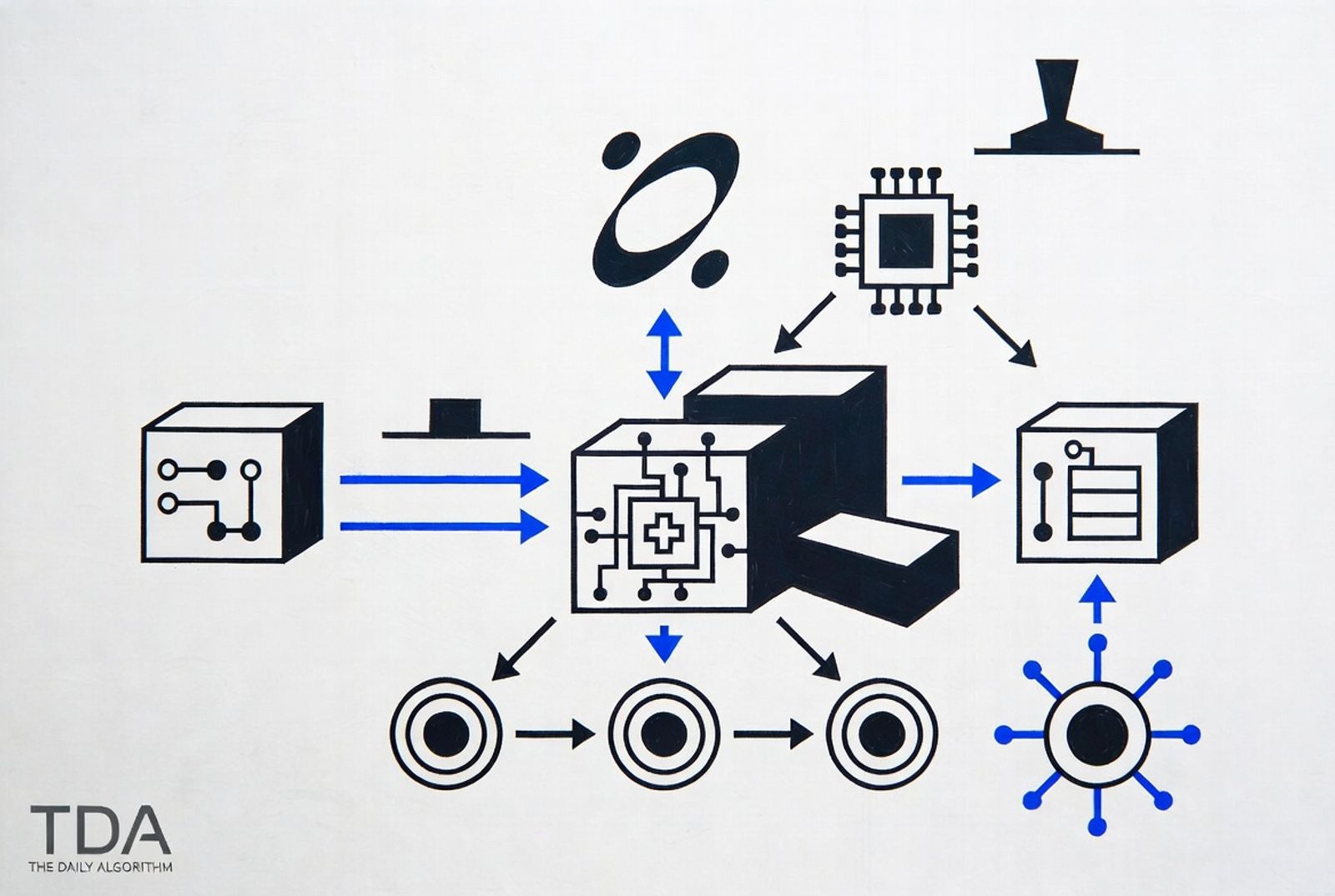
The term "AI agent" is being diluted through marketing overuse, so precision matters here. The arxiv paper 2503.12687v1 provides the operative technical definition: AI agents are large language models augmented with four distinct capability layers “memory”, “planning”, “tool use” and “environmental interactions”. This is not a chatbot with a personality prompt. It is a system that perceives state, forms multi-step plans, executes actions across external systems, evaluates outcomes, and iterates.
IBM's 2024 documentation further specifies the mechanism of “task decomposition”: agents break complex objectives into specific tasks and subtasks, executing them sequentially or in parallel, then synthesizing results. Andrew Ng's framing adds the critical architectural dimension of multi-agent collaboration networks of specialized agents that delegate, coordinate, and check each other's work which is what enables the speed benchmarks his teams report: 20 functional prototypes built in a single weekend.
The four-layer architecture memory, planning, tool use, environmental interaction, is what separates agents from all prior automation paradigms. Every prior generation of automation was stateless, single-step, and tool-agnostic. Agents are stateful, multi-step, and tool-native.
---
3. The Customer Operations Detonation: Klarna, Intercom, and the 700-Agent Benchmark
The most quantitatively significant data point in current agentic AI deployment comes from Klarna. In its first month of operation, Klarna's AI agent managed “2.3 million customer service conversations” a volume the company equated to the output of 700 full-time human agents. This is not a pilot metric or a cherry-picked A/B test result. It is a disclosed operational figure from a public-facing fintech company with regulatory accountability.
Intercom's Fin AI agent compounds this signal. Across thousands of deployed businesses, Fin autonomously resolves “over 50% of customer queries” without any human escalation. The operative word is "autonomously" not "deflects to an FAQ" or "routes to a lower-cost tier," but resolves: the customer's issue is closed without human involvement.
The Aberdeen survey, 281 IT decision makers, conducted Sep–Oct 2025, covering North America, EMEA, APAC, and India, frames the enterprise adoption curve: 58% of surveyed IT leaders are already deploying AI agents specifically to improve customer support operations. This is not a future-state aspiration; it is current operational reality for more than half of a statistically structured sample of enterprise IT decision-makers.
The business model implication is severe for traditional CX outsourcing and helpdesk software vendors. If a single AI agent deployment at Klarna replaces 700 FTEs in month one, the labor arbitrage economics of offshore customer service operations face a structural challenge that price competition cannot address. The agents are not cheaper labor they are a different cost category entirely.
---
4. Enterprise Stack Consolidation: Salesforce, Microsoft, and ServiceNow Bet the Platform
The three dominant enterprise software platforms: Salesforce, Microsoft, and ServiceNow have each embedded agentic capabilities directly into their core product surfaces. This is a platform-level strategic move, not a feature release cycle.
Salesforce's “Agentforce” is the most architecturally aggressive of the three. It enables the creation of autonomous AI agents that execute actions across the entire CRM ecosystem: sales, service, marketing, commerce without requiring human instruction at each decision point. The significance here is the phrase "without human instruction at each step." Traditional CRM automation required a human to define every branch of every workflow. Agentforce agents determine their own action sequences within defined guardrails. The CRM becomes an environment the agent operates within, rather than a tool a human operates through.
Microsoft's Copilot Studio and ServiceNow's agentic layer follow a similar pattern: they are converting their existing workflow orchestration infrastructure into agent runtimes. The strategic logic is clear, whichever platform controls the agent runtime layer controls the primary interface through which enterprise work gets executed.
This consolidation dynamic has a direct implication for the point-solution automation vendors the Zapiers, the legacy marketing automation platforms, the standalone RPA tools. When the CRM, the productivity suite, and the ITSM platform all natively execute agentic workflows, the value proposition of a separate orchestration layer compresses dramatically.
---
5. Software Engineering: The "Human Optional" Thesis and Its Evidence Base
The most contested and consequential claim in the agentic AI discourse is that software development itself is being reorganized around agents. The evidence base is fragmentary but directionally consistent.
The Sisgain analysis reports a force-multiplier benchmark: one senior engineer with AI agent tooling now executes the output previously requiring a team of five. This is a 5:1 compression ratio on engineering headcount for equivalent output. If that ratio holds at scale, it restructures the economics of software development organizations more profoundly than any prior productivity tool, including IDEs, version control, or cloud infrastructure.
AI coding agents already autonomously generate, test, and refactor code. The role of the software engineer is analytically shifting toward higher-order functions: architecture decisions, system design, requirements translation, and cross-functional judgment calls that agents currently cannot execute reliably without human framing. Victor on Software states the shift directly "The old way of working as a software developer is not coming back".
The most aggressive formulation comes from Daniel Braz, CTO at BRQ Product & Experience Studios, who argues that AI agents now handle the entire software development arc: requirement understanding, problem decomposition, architecture selection, implementation, testing, and deployment with the human role described as "optional." This framing is deliberately provocative, but it is analytically useful as a stress-test of the capability ceiling.
The honest analytical position is that "human optional" overstates current reliability for complex, ambiguous, or high-stakes systems, but accurately describes the trajectory for well-scoped, bounded development tasks. The engineering labor market is not facing elimination; it is facing radical stratification, where engineers who can operate as agent orchestrators and system architects command premium compensation, while those whose value was in implementation velocity face direct displacement pressure.
---
6. Adoption Metrics and the Enterprise Diffusion Curve
(Methodology note: 15-minute online survey, 281 IT decision makers involved in AI agent purchase decisions, Sep–Oct 2025, across North America, EMEA, APAC, and India)
The Aberdeen survey provides the most structured quantitative snapshot of current adoption:
- Two-thirds of IT leaders are already using AI agents to automate business processes.
- 58% are specifically targeting customer support operations.
These are not "considering" or "evaluating" figures. These are current deployment figures among a sample specifically filtered to those involved in AI agent “purchase decisions”, meaning the broader enterprise population almost certainly shows lower but rising penetration. The survey's geographic scope (four major global regions) reduces the risk of regional sampling bias.
The adoption curve is consistent with a technology that has cleared the proof of concept phase and is in active operational scaling. The Klarna and Intercom data provide the outcome benchmarks that are driving that enterprise decision making. When a peer company in your sector publicly reports replacing 700 FTEs with a single agent deployment, the internal business case for evaluation becomes self-writing.
---
7. Strategic Implications: What Gets Disrupted, What Gets Built
The displacement map is not uniform. Rule based systems are being eliminated at the task-execution layer, the if/then marketing automation sequences, the scripted helpdesk routing trees, the static RPA workflows. These are being replaced by agent runtimes that dynamically interpret intent, form plans, and execute multi-step actions.
What gets built in their place:
1. Agent orchestration platforms — infrastructure for managing, monitoring, and governing networks of autonomous agents across enterprise environments. This is a nascent but high-value segment.
2. Agentic evaluation and safety tooling — as agents take consequential actions (modifying CRM records, initiating customer communications, generating and deploying code), enterprises need audit trails, behavioral guardrails, and failure recovery mechanisms.
3. Domain-specific agent fine-tuning — generic LLMs are insufficient for specialized enterprise contexts. Vertical-specific agent models trained on domain data (legal, financial, clinical) represent a distinct product category.
4. Human-agent collaboration interfaces — the engineering and operational roles that survive agent displacement require new interface paradigms: dashboards for supervising agent fleets, intervention mechanisms, and exception-handling workflows.
The compression of team sizes (5:1 engineering ratios, 700-agent-equivalent customer ops) does not mean total headcount falls proportionally. It means the organizational unit of value production shifts from individuals performing defined tasks to individuals governing agents performing those task. That is a different labor market problem and a different talent acquisition challenge than simple workforce reduction.
---
The Bottom Line
The if/then architecture is not being augmented. It is being structurally replaced by systems that plan, remember, act, and iterate systems that Stuart Russell's own taxonomy classified as categorically superior to conditional logic from the first principles of AI theory. The Klarna 700-agent benchmark is the single most market-legible data point in this transition: it converts the abstract capability claim into a concrete operational displacement figure that enterprise CFOs can model directly.
The platforms that control the agent runtime layer; Salesforce, Microsoft, ServiceNow are positioning for a structural capture of enterprise workflow execution. The point solution automation vendors that do not embed agentic capabilities face a compression of their addressable market that is not recoverable through price competition alone.
For engineering organizations, the 5:1 productivity ratio and the "full development arc" thesis from Braz represent the outer boundary of near-term disruption. The practical immediate reality is a workforce stratification, not elimination but the stratification is steep, and the timeline for its full expression is measured in product cycles, not decades.
The old automation stack had a ceiling. The new one does not yet have a defined floor.
---



Loading comments...